The Ultimate Guide to Torch Safety: Mastering High-Heat Tools for Connoisseurs (2026 Edition)
In the world of specialized smoke shop gear, few tools are as essential—or as potentially intimidating—as the butane torch. Whether you are a seasoned enthusiast or a curious newcomer, the leap from a standard pocket lighter to a high-powered jet torch is a significant one. While these tools provide the precision and temperature (often exceeding 2,500°F) necessary for a premium experience, they also require a heightened level of respect and technical knowledge. This comprehensive guide will walk you through everything you need to know about torch safety, maintenance, and best practices to ensure your sessions remain safe, efficient, and enjoyable.
Jainy Patel
2/10/20263 min read
Why Torch Safety Matters
Using a torch isn't just about "flicking a switch." We are dealing with pressurized flammable gas and concentrated heat. Improper use can lead to:
Equipment Damage: Overheating can crack expensive glassware or melt internal torch components.
Personal Injury: Flash burns or "whisker singeing" are common for those who don't respect the flame’s reach.
Property Hazard: Butane is heavier than air; leaks can settle in low spots, creating invisible fire hazards.
1. Choosing the Right Equipment
Safety starts before you even ignite the flame. Not all torches are created equal.
Industrial vs. Culinary vs. Boutique Torches
While you can find torches at hardware stores, smoke-shop-specific torches (like those from Blazer or Big Shot) are engineered for the specific angles and durations required for heating glass and quartz. Look for:
Safety Locks: A physical switch that prevents accidental ignition in a bag or drawer.
Flame Adjustment: The ability to dial the heat up or down based on the task.
Base Stability: A wide, detachable base to prevent the torch from tipping over while hot.
2. The Art of the Refill: Avoiding the "Flash"
Most torch accidents happen during the refilling process. Follow these steps religiously:
The "Purge" Method
Before adding new butane, you must "bleed" the tank. Use a small screwdriver to press the intake valve until the hissing stops. This removes trapped air, which can cause "sputtering" or inconsistent flames.
Using High-Quality Fuel
Don't settle for "gas station butane." Low-quality fuel contains impurities that clog the tiny jets in your torch. Look for Near Zero Impurity or 14x Refined butane. It burns cleaner, smells less, and extends the life of your tool.
The 10-Minute Rule
Never ignite a torch immediately after refilling. 1. Butane is freezing cold when it leaves the can. 2. Leaked gas may be lingering on your hands or the body of the torch. 3. Wait 5–10 minutes for the gas to reach room temperature and for any stray vapors to dissipate.
3. Safe Operation Techniques
Once your torch is filled and stabilized, operation is all about environment and distance.
Clear the Landing Zone
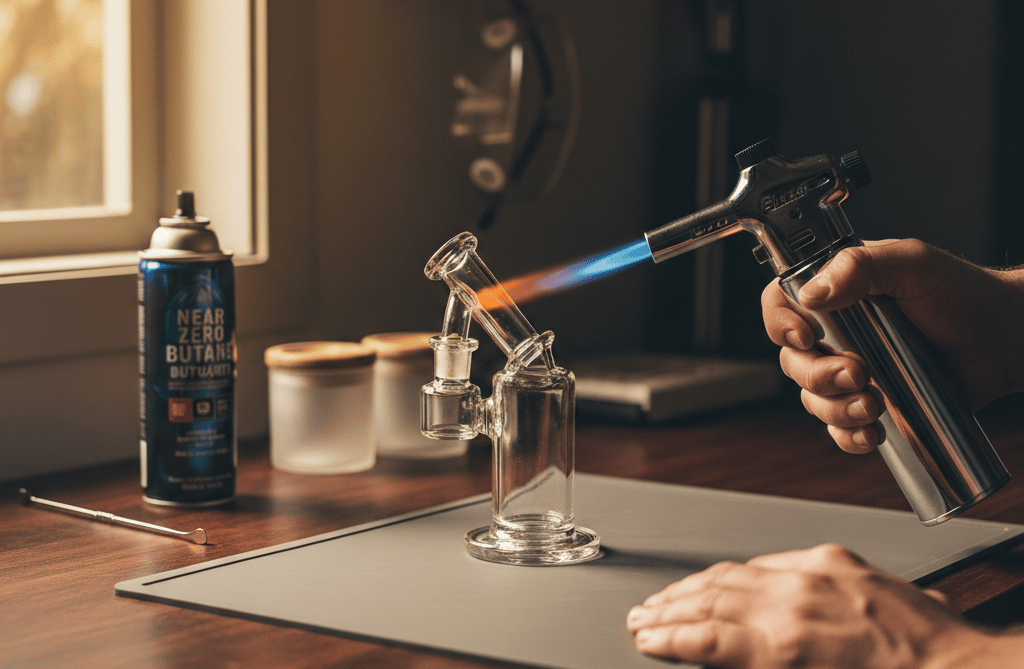
Always operate your torch on a heat-resistant surface (like a silicone mat or stone countertop). Ensure there are no flammable liquids (like isopropyl alcohol used for cleaning) within three feet of your workspace.
The "Reach" of the Blue Flame
The hottest part of the flame isn't the visible blue tip—it's just past it.
Distance: Keep the torch nozzle at least 2–3 inches away from the object you are heating.
Motion: Never hold the flame on one spot. Use a steady, circular motion to distribute heat evenly. This prevents "thermal shock," which causes glass to shatter.
4. Storage and Post-Use Safety
A torch remains dangerous for several minutes after the flame is extinguished.
The Cooling Phase: Do not touch the metal nozzle for at least 5 minutes after use. Treat it like a hot stovetop burner.
Upright Storage: Always store your torch upright. Storing it on its side can lead to fuel leaks or valve degradation.
Temperature Control: Never leave a butane torch in a hot car. Pressurized cans and heat are a recipe for explosion. Store in a cool, dry place away from direct sunlight.
5. Troubleshooting: What to Do if Things Go Wrong
The "Eternal Flame": If the flame stays lit after you release the trigger, don't panic. Turn the gas adjustment dial to the lowest (-) setting immediately. If it persists, move it to a sink or outdoor area until the fuel runs out.
The Sputter: This usually means there is air in the tank. Purge the torch and refill with high-quality butane.
Summary Checklist for Every Session
[ ] Is the area clear of alcohol and flammable materials?
[ ] Did I wait 10 minutes after refilling?
[ ] Is my glassware free of cracks?
[ ] Am I using a stable, flat surface?
Final Thoughts for the Enthusiast
Investing in a high-quality torch is an investment in your hobby. By following these safety protocols, you aren't just protecting yourself—you're ensuring that your equipment lasts for years and your sessions remain the relaxing ritual they are meant to be.
Looking for the best butane or a torch with a lifetime warranty? Come visit us at the shop! We carry a curated selection of the safest, most reliable brands on the market, and our team is always happy to give you a hands-on demo on how to refill and maintain your gear.